NexoraGPU
An AI computing server manufacturer designs and builds the specialized machines that power modern artificial intelligence. These systems combine GPUs, CPUs, high-speed memory, storage, networking, and advanced cooling. They are not ordinary office servers with larger price tags. They must process enormous datasets while maintaining stable performance under continuous workloads.
Supermicro founder and CEO Charles Liang has said, “AI is the most important technology trend of our time.” His observation explains why this industry matters. An experienced ai computing server manufacturer does more than assemble components. It validates thermal behavior, firmware compatibility, power delivery, rack density, and long-term reliability. A well-designed server may contain eight accelerators, liquid-cooling pipes, and several high-speed network connections. Every detail affects training speed and operating cost.
The label is useful, but imperfect. Some manufacturers design their own platforms, while others integrate certified components from multiple suppliers. That difference can influence support quality, upgrade options, and delivery schedules. Buyers should examine benchmark methods, warranty terms, service coverage, and energy requirements before making a decision. Numbers alone can mislead.
A credible ai computing server manufacturer also understands real working conditions. Dust, limited floor space, noisy fans, and unstable workloads can expose weaknesses that laboratory tests miss. The strongest companies document their testing procedures and communicate limitations clearly. That builds trust. It also reflects a practical truth: powerful hardware is valuable only when it remains dependable after installation.
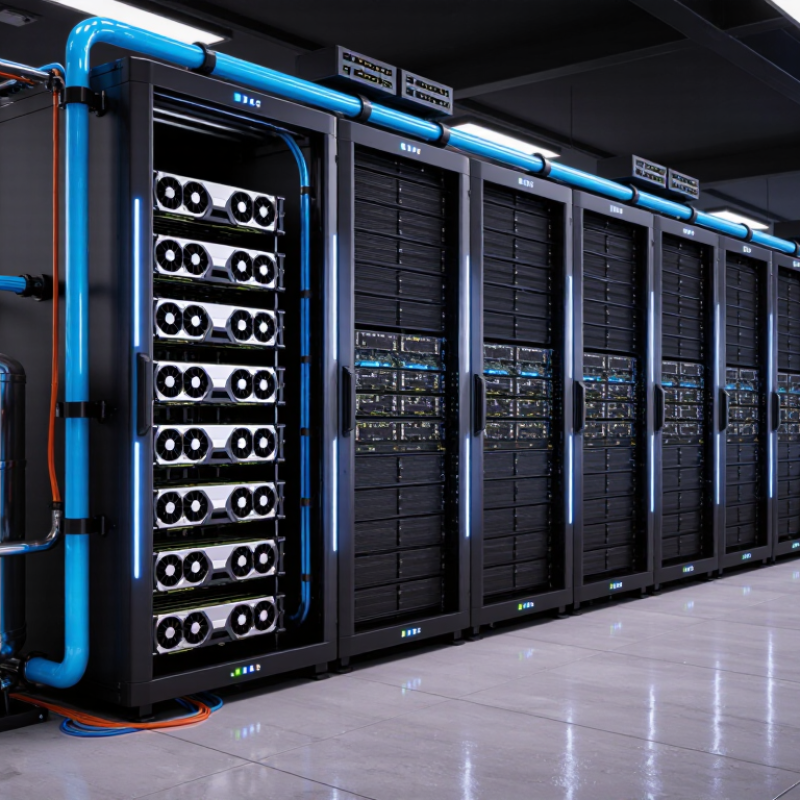
An AI computing server manufacturer designs and builds systems for demanding artificial intelligence workloads. Its role extends beyond assembling hardware. It selects processors, accelerators, memory, storage, networking components, and cooling systems. These parts must work together reliably under continuous load.
In practice, manufacturers test servers with model training, image processing, and real-time inference tasks. They measure temperature, power consumption, processing speed, and system stability.
A well-designed server may include high-speed memory, efficient airflow, redundant power supplies, and remote monitoring tools. These details matter in crowded data centers. Small thermal problems can become expensive failures.
A manufacturer also supports deployment through configuration advice, firmware updates, technical documentation, and maintenance services. Strong engineering teams explain performance limits honestly. A specification sheet can look impressive, yet real results depend on software, workload size, and network design. No design is perfect. Buyers should question unclear testing methods and unsupported performance claims.
Tips:
Define the workload before choosing hardware. Check cooling requirements and power capacity. Ask for independent test data. Review warranty terms carefully. Confirm that replacement parts and technical support are available in your region. Avoid choosing only by processor count; balanced system design often matters more.
An AI computing server manufacturer designs systems for demanding machine learning workloads, not ordinary office tasks. Its work begins with selecting processors, accelerators, memory, networking, and storage that must operate as one dependable platform. A poorly balanced system can leave expensive accelerators waiting for data.
Core performance depends on parallel computing hardware and high-bandwidth memory. Accelerators process large matrices quickly, while memory supplies model parameters and training data. High-speed interconnects reduce delays between processors and accelerator cards. Technologies such as PCIe and CXL can improve data movement, but their benefits depend on careful system design.
Cooling is equally important. Dense servers may use airflow tunnels, heat pipes, or direct liquid cooling to control temperatures near heavily loaded chips. Power supplies must handle sudden workload changes without instability. Fast networking and solid-state storage also shorten data transfer and checkpoint times. In practice, engineers should test these parts together, using long training runs rather than short demonstrations.
Reliability requires more than impressive specifications. Manufacturers validate firmware, thermal behavior, error correction, and remote management under continuous workloads. They also need clear service procedures and accurate technical documentation. No design is perfect. A system can perform well in a laboratory yet struggle in a crowded data center. That gap deserves honest testing and continued review.
An AI computing server manufacturer turns demanding machine-learning requirements into reliable, testable hardware. The work begins with workload analysis. Engineers review model size, accelerator count, memory bandwidth, storage needs, and network traffic. These details shape the server design, rather than the other way around.
During manufacturing, technicians install processors, accelerators, memory modules, power supplies, and high-speed connections. Thermal design receives close attention. Airflow paths, fan curves, heat sinks, and rack density can affect long-term stability. Firmware is configured before functional testing begins. Engineers then check boot behavior, sensor readings, power usage, and communication between computing nodes. Burn-in tests may run for many hours under controlled workloads. Production records should include component lots, test results, and repair history. This traceability supports accountability when a failure appears months later.
Tips: Ask for thermal test conditions, not only performance figures. Request evidence of stress testing, firmware validation, and quality controls. A clean benchmark is useful, but it cannot reveal every field problem. Real deployment feedback should influence later revisions. No process is perfect. A loose cable, uneven airflow, or incomplete test script can still cause trouble. Manufacturers with strong expertise keep reviewing these weak points and improve their design, assembly, and testing methods over time.
An AI computing server manufacturer does more than assemble metal cases. It designs systems for model training, inference, data processing, and demanding research workloads. Key products may include rack servers, accelerator platforms, storage nodes, and high-speed networking equipment. Engineers select processors, memory, accelerators, power supplies, and cooling systems as one balanced unit. A powerful accelerator is not useful if data arrives too slowly. That detail is often missed.
Manufacturers also provide configuration and validation services. They can match server capacity to model size, dataset volume, user demand, and facility limits. Thermal testing checks performance during sustained workloads, not short demonstrations. Burn-in tests, firmware checks, and compatibility reviews help reduce early failures. Some providers offer installation, remote monitoring, replacement parts, and on-site maintenance. Clear service agreements should state response times, spare-part coverage, and security responsibilities. Buyers should request measurable results, including throughput, power use, noise levels, and recovery procedures.
Reliable manufacturers support the server throughout its operating life. They may help tune drivers, schedule workloads, expand memory, or add storage later. Good documentation matters. It lets technical teams reproduce settings and investigate faults without guesswork. Yet no specification guarantees perfect results. Software changes, uneven data pipelines, and room temperature can alter performance. Test real workloads. A careful buyer should use representative data before approving a large deployment. That process can feel slow, but correcting an oversized or poorly cooled system costs more.
AI server manufacturers design and integrate systems for model training, fine-tuning, and inference. Accelerator counts of 1, 4, 8, and 16 are common representative configurations, while related services typically include hardware integration, thermal design, cluster networking, software deployment, and technical support.
An AI computing server manufacturer designs and builds systems for demanding workloads such as model training, inference, simulation, and data analysis. However, evaluating one requires more than comparing processor counts or advertised speeds. The real test is whether its servers remain stable under continuous, high-intensity operation.
Start by examining technical compatibility. Check accelerator support, memory capacity, storage bandwidth, network speed, and cooling design. A server may include powerful processors but still create bottlenecks through slow data movement. Ask for benchmark results using workloads similar to yours, not only laboratory demonstrations. Ask for evidence. Clear documentation matters.
Reliability should be measured through warranty terms, repair procedures, firmware updates, and spare-part availability. Request details about thermal testing, power protection, remote management, and failure monitoring. A dependable manufacturer should explain how it handles defective components and urgent maintenance. Talk with existing users when possible, especially those operating systems in similar environments. Their daily experience often reveals noise, heat, configuration errors, or delayed support.
Cost also deserves careful review. Include electricity, cooling, installation, software compatibility, and future expansion. A lower purchase price can become expensive when upgrades require replacing the entire system. No checklist is perfect. I would still leave room for doubt, because benchmark conditions rarely match a busy production room. Small details matter. Evaluate the manufacturer’s engineering communication, not just its specification sheet.
An AI computing server manufacturer designs, integrates, tests, and supports servers optimized for artificial intelligence workloads such as model training, fine-tuning, inference, scientific computing, and high-performance data processing. The following table provides a practical, brand-neutral framework for evaluating a manufacturer.
| Evaluation Dimension | What It Means | Relevant Data or Technical Indicator | Evidence to Request | Recommended Evaluation Weight |
|---|---|---|---|---|
| AI Hardware Architecture | Whether the manufacturer can build systems suitable for the intended training, inference, or data-processing workload. | Support for accelerator-based computing, high-speed host CPUs, large memory capacity, fast storage, and balanced input/output bandwidth. | Detailed system architecture, workload suitability guide, component compatibility list, and configuration drawings. | 15% |
| Accelerator Density | The number of AI accelerators that can be installed and operated reliably in one server chassis. | Common designs support 1, 2, 4, or 8 accelerator cards. Higher density generally requires advanced power delivery, cooling, and airflow design. | Maximum accelerator count, rack-unit size, power requirements, thermal design power range, and validated operating conditions. | 12% |
| Accelerator Memory | The high-speed memory available to each accelerator for model parameters, activations, and intermediate computations. | Memory capacity is commonly specified in gigabytes per accelerator. Total usable capacity depends on the number of accelerators and the software communication method. | Accelerator memory capacity, memory type, error-correction capability, multi-accelerator memory behavior, and supported model sizes. | 10% |
| System Memory | The amount of main memory available to the operating system, data loaders, preprocessing tasks, and CPU-based workloads. | AI servers may be configured from approximately 256 GB to several terabytes of system memory, depending on model size and dataset requirements. | Maximum supported memory, memory channels, error-correcting memory support, memory expansion path, and validated memory configurations. | 8% |
| Interconnect Performance | The speed and latency of communication between accelerators and between servers in a cluster. | Important indicators include accelerator-to-accelerator bandwidth, network link speed, port count, topology, and collective communication performance. | Topology diagrams, measured bandwidth and latency results, cluster scaling tests, and results for distributed training frameworks. | 12% |
| Networking Capability | The server's ability to move training data, checkpoints, and distributed-computing traffic efficiently. | Network interfaces may range from 10 GbE and 25 GbE for general workloads to 100 GbE, 200 GbE, or higher for demanding clustered systems. | Network interface specifications, supported network fabrics, congestion-control features, port configuration, and throughput test results. | 8% |
| Storage Performance | The ability to load datasets quickly, write checkpoints, and maintain reliable local operating-system and application storage. | Assessment should include solid-state storage interface, sequential throughput, random I/O performance, storage capacity, redundancy, and expansion options. | Storage bill of materials, measured read/write results, RAID or software redundancy options, endurance information, and hot-swap support. | 8% |
| Power and Thermal Design | Whether the server can operate safely and consistently under sustained AI workloads. | Review maximum power draw, power-supply redundancy, operating temperature range, fan configuration, airflow direction, and cooling requirements. | Power budget, thermal test report, acoustic data, airflow specifications, power-supply efficiency information, and rack environmental requirements. | 10% |
| Reliability and Serviceability | How easily failures can be detected, isolated, and repaired without unnecessary downtime. | Useful features include error-correcting memory, redundant power supplies, hot-swappable drives, fault alerts, remote management, and replaceable fans. | Failure-handling procedures, component replacement time, diagnostic tools, spare-parts policy, reliability test results, and service documentation. | 10% |
| Management and Monitoring | The quality of tools used to deploy, monitor, update, and control servers remotely. | Look for hardware health monitoring, remote console access, firmware management, power control, event logs, inventory reporting, and API support. | Management interface demonstration, supported management protocols, update process, security controls, and sample monitoring reports. | 7% |
| Software Compatibility | Whether the server works with the operating systems, drivers, libraries, containers, and AI frameworks required by the customer. | Compatibility should cover the selected operating system, accelerator drivers, container runtime, orchestration platform, machine-learning frameworks, and monitoring stack. | Compatibility matrix, driver validation records, installation guide, container images, software lifecycle policy, and reproducible deployment instructions. | 8% |
| Benchmark Transparency | Whether published performance data can be independently verified and compared with alternative configurations. | Useful metrics include training time per epoch, samples per second, inference latency, throughput, power consumption, utilization, and scaling efficiency. | Test methodology, dataset and model details, batch size, precision format, software versions, power measurement method, and raw test results. | 5% |
| Manufacturing and Quality Control | The consistency of assembly, testing, configuration, and shipment across multiple systems. | Relevant processes include component traceability, burn-in testing, firmware validation, production inspection, configuration control, and documented acceptance testing. | Quality-management procedures, factory acceptance checklist, test coverage, serial-number traceability, inspection records, and nonconformity process. | 3% |
| Warranty and Technical Support | The manufacturer's ability to maintain the system throughout its operational lifecycle. | Compare warranty duration, response time, replacement-part availability, remote support, on-site service coverage, escalation procedures, and firmware support period. | Written warranty terms, service-level agreement, support hours, escalation contacts, spare-parts locations, and repair or replacement workflow. | 7% |
| Total Cost of Ownership | The complete cost of purchasing, operating, maintaining, upgrading, and eventually replacing the server. | Include acquisition cost, electricity, cooling, networking, storage, software support, maintenance, spare parts, downtime risk, and expected service life. | Five-year cost model, typical power consumption, maintenance pricing, upgrade costs, energy assumptions, and disposal or refresh policy. | 5% |
It designs and builds servers for model training, image processing, and real-time inference. It selects processors, accelerators, memory, storage, networking, and cooling components. The parts must work together under continuous load.
Engineers review model size, accelerator needs, memory bandwidth, storage capacity, and network traffic. These details determine the suitable server design. Processor count alone can mislead buyers.
Technicians check boot behavior, sensor readings, power use, and communication between computing nodes. Burn-in tests may run for many hours under controlled workloads. No test catches everything.
Accelerated workloads create heavy heat inside crowded data centers. Airflow paths, fan curves, heat sinks, and rack density affect stability. A loose cable or uneven airflow can still cause trouble.
They should explain thermal conditions, workload types, firmware checks, and stress-test duration. Independent performance data is useful. A clean benchmark may hide field problems.
Records should identify component lots, test results, firmware status, and repair history. This traceability helps teams investigate failures months later. Missing records weaken accountability.
Useful support includes configuration advice, firmware updates, technical documents, monitoring tools, and maintenance services. Buyers should confirm replacement parts and technical assistance in their region. Promises need evidence.
Define the workload first, then check power capacity, cooling needs, network design, and warranty terms. Ask how performance was measured. I would not trust processor count alone.
An ai computing server manufacturer is a specialized company that develops and produces high-performance computing systems designed for artificial intelligence workloads. Its role includes integrating processors, accelerators, memory, storage, networking, cooling, and power systems to support demanding tasks such as model training, data analysis, and real-time inference. Core technologies may include parallel computing architectures, high-speed interconnects, advanced thermal management, scalable storage, and intelligent system monitoring.
The manufacturing process typically covers system design, component selection, prototype development, assembly, firmware and software integration, performance optimization, reliability testing, and quality inspection. Key products and services can include rack servers, workstation systems, custom server platforms, deployment support, maintenance, and technical consultation. When evaluating an ai computing server manufacturer, organizations should consider computing performance, scalability, energy efficiency, customization capabilities, testing standards, product reliability, support quality, delivery capacity, and total ownership cost. A strong manufacturer should provide stable solutions that align with both current workloads and future growth.
