NexoraGPU NexoraGPU

China Best Industrial AI Server Manufacturer for Buyers

Time:2026-09-09 Author:Mason
0%

Choosing the right industrial AI server manufacturer is a practical decision, not merely a search for the highest specification. Industrial buyers need dependable computing beside robotic arms, inspection cameras, and production lines. A server that performs well in a laboratory may struggle with dust, heat, vibration, or limited floor space.

The strongest manufacturers combine GPU acceleration, industrial-grade chassis design, remote management, and long-term product support. They also understand deployment realities. For example, a factory may require low-latency inference near a welding station, while sending selected data to a central platform. That balance affects hardware costs, network design, maintenance, and cybersecurity planning. Small details matter.

Charles Liang, President and CEO of Supermicro, has emphasized, “The future of computing is green computing.” His statement is especially relevant to industrial AI servers, which can consume substantial power during continuous inference and model training. Efficient cooling, power management, and modular upgrades should therefore be part of the purchasing discussion.

Yet no manufacturer is perfect. Some suppliers advertise impressive benchmark results but provide limited evidence from real factories. Buyers should ask for thermal tests, lifecycle policies, warranty terms, and references from comparable industries. A lower purchase price may become expensive after repeated downtime. That risk is easy to underestimate.

This guide examines how to evaluate a China-based industrial AI server manufacturer through performance, reliability, customization, compliance, and service capability. The goal is not to promote one supplier blindly. It is to help buyers make a clearer decision, while recognizing that every factory has different workloads, budgets, and operational weaknesses.
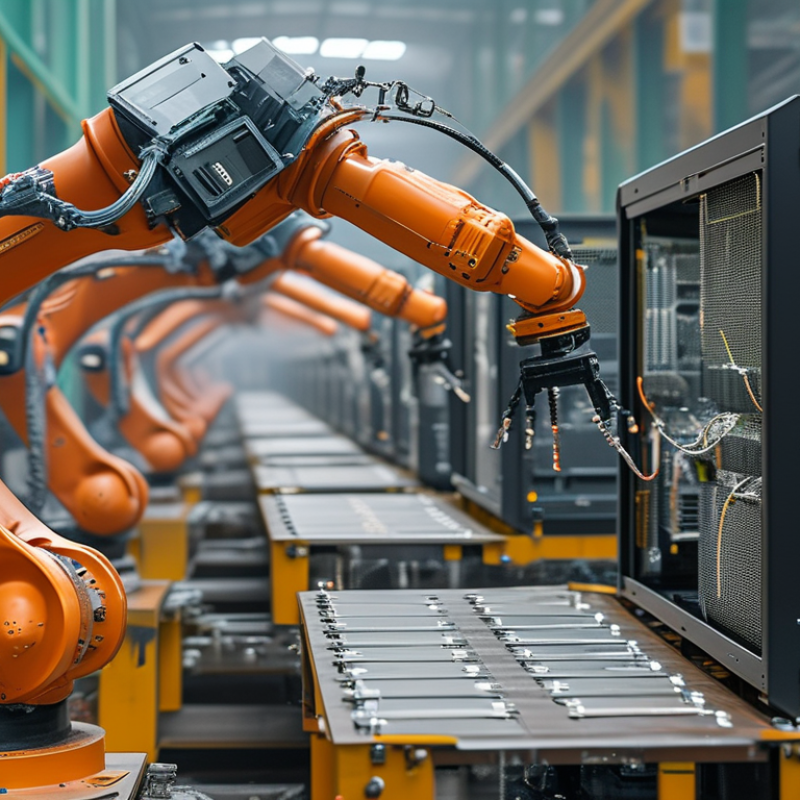
China Best Industrial AI Server Manufacturer for Buyers

Definition and Role of Industrial AI Server Manufacturers

China Best Industrial AI Server Manufacturer for Buyers

Definition and Role of Industrial AI Server Manufacturers

An industrial AI server manufacturer designs computing systems for factories, energy sites, logistics hubs, and other demanding environments. These systems combine GPUs, CPUs, high-speed networking, rugged chassis, and remote management tools. Unlike standard data-center equipment, industrial servers must handle dust, vibration, temperature changes, and continuous operation.

The manufacturer’s role extends beyond hardware assembly. It includes workload analysis, thermal engineering, firmware validation, lifecycle planning, and technical support. IDC’s Worldwide AI and Generative AI Spending Guide projects global AI infrastructure spending will exceed 200 billion dollars by 2028. This growth increases demand for reliable edge and plant-floor computing. The International Energy Agency also reports that data-center electricity use could exceed 1,000 terawatt-hours by 2026. Efficient power design now matters as much as processing speed.

In practical projects, buyers should examine ECC memory, redundant power supplies, GPU compatibility, operating-temperature ratings, and remote diagnostics. Field testing is essential. A server may perform well in a laboratory, yet fail beside a furnace or production line. Manufacturers should provide measurable validation records, replacement-part plans, and clear warranty terms. No design is perfect. Overlooking cable routing or airflow can create expensive downtime. Careful manufacturers admit these risks and improve their systems through documented testing and customer feedback.

Core Technologies Used in Industrial AI Server Production

China Best Industrial AI Server Manufacturer for Buyers

Core Technologies Used in Industrial AI Server Production

Industrial AI servers combine accelerated computing, reliable memory, and strict thermal control. Modern designs commonly pair CPUs with GPUs or other AI accelerators. High-speed interconnects reduce data movement between processors. Error-correcting memory protects long-running training and inference tasks. These details matter when a factory cannot pause production.

The Stanford AI Index 2024 reported a 280-fold reduction in inference costs for GPT-3.5-level performance between November 2022 and October 2023. This trend supports wider industrial deployment, but lower cost does not remove engineering risks. Manufacturers still need redundant power supplies, hot-swappable storage, and remote management. Industrial models also benefit from containerized software and secure boot functions. Network timing must remain stable for machine vision and robotic control.

Thermal engineering is often underestimated. The International Energy Agency reported that data centers used about 460 TWh of electricity globally in 2022. It projects consumption could exceed 1,000 TWh by 2026. Industrial servers therefore need efficient fans, heat pipes, or liquid cooling, depending on rack density. Dust filters and vibration-resistant assemblies are equally important in workshops. A practical weakness remains: peak benchmark scores may hide poor performance under constant heat. Buyers should test sustained workloads, recovery behavior, and power use before selecting a manufacturing partner.

Core Technologies Used in Industrial AI Server Production

The chart compares the approximate one-way payload bandwidth of PCIe x16 generations commonly used for connecting AI accelerators, high-speed networking adapters, and storage controllers. Higher bandwidth helps industrial AI servers move data faster between processors, accelerators, memory, and peripherals. Values are theoretical interface limits rather than measurements from any specific manufacturer.

Key Criteria for Choosing a Chinese AI Server Manufacturer

China Best Industrial AI Server Manufacturer for Buyers

Selecting a Chinese industrial AI server manufacturer requires evidence beyond a polished factory tour. Buyers should inspect thermal designs, accelerator compatibility, rack-level testing, and firmware controls. Ask for burn-in records, component traceability, and measured performance under sustained workloads. Documentation matters. A capable supplier should provide clear test methods, not only impressive peak figures.

Power efficiency deserves serious attention. The International Energy Agency’s Electricity 2024 report estimates that data centers consumed about 460 TWh globally in 2022. It projects demand could reach 620–1,050 TWh by 2026. Therefore, compare performance per watt, cooling capacity, fan behavior, and power redundancy. A server that performs well for ten minutes may fail during a twelve-hour industrial run. Test it yourself.

Reliability also depends on service after delivery. Uptime Institute’s 2023 Global Data Center Survey found that 60% of operators experienced an outage within three years, while 16% reported costs above one million dollars. Request response-time commitments, spare-parts locations, remote diagnostics, and repair procedures. Verify certifications independently. A low quotation can hide weak support, limited validation, or unstable supply planning. I have seen procurement teams overvalue chassis appearance and underestimate firmware updates. That judgment deserves review. No checklist is perfect.

Manufacturing, Testing, and Quality Assurance Processes

China Best Industrial AI Server Manufacturer for Buyers

Manufacturing, Testing, and Quality Assurance Processes

Industrial AI servers require stricter control than office computing equipment. Production begins with traceable components, supplier audits, and firmware verification. Each unit should receive serial-level records. These records cover processors, memory, storage, power modules, and cooling parts. IDC forecasts global AI infrastructure spending will reach 632 billion dollars by 2028. This growth increases pressure on manufacturers to prove consistency, not only speed.

Testing should reflect factory conditions. Engineers commonly run thermal cycling, vibration checks, extended loading, and power-failure recovery tests. A server may operate beside motors, dust, and unstable temperatures. It must still deliver stable inference results. Quality teams should compare benchmark results against defined tolerances. The 2024 Global Data Center Survey by Uptime Institute reported that 54% of respondents experienced an outage costing more than 100,000 dollars. That figure shows why burn-in testing and redundant power design matter. No test plan is perfect. Weak assumptions can survive unnoticed.

Tips: Request a sample quality report before purchasing. Check burn-in duration, temperature ranges, error thresholds, and calibration dates. Ask whether failed components receive root-cause analysis. Verify packaging protects connectors during transport. Factory acceptance testing should include your actual workload, not only a generic benchmark. Small details matter. One overlooked cable can delay deployment.

China Best Industrial AI Server Manufacturer for Buyers - Manufacturing, Testing, and Quality Assurance Processes

Process Area Manufacturing or Quality Dimension Typical Industrial Practice Verification Method Buyer Acceptance Indicator
Design and Engineering Industrial operating environment Configuration is selected according to temperature, humidity, dust exposure, vibration, rack space, and continuous-duty requirements. Requirement review, environmental specification check, and application-risk assessment. Documented operating limits and a configuration matched to the installation site.
Component Control Traceability of processors, memory, storage, power supplies, and cooling components Incoming materials are identified by lot, part number, revision, and supplier documentation before assembly. Incoming inspection, barcode or serial-number records, and certificate review where applicable. Complete bill of materials, traceable component records, and no unauthorized substitutions.
PCB and Electronic Assembly Soldering and assembly consistency Automated placement and controlled reflow profiles are commonly used for high-volume electronic assemblies. Automated optical inspection, solder-joint inspection, and electrical continuity testing. No open solder joints, bridging, missing components, polarity errors, or abnormal electrical readings.
Mechanical Assembly Chassis fit, fasteners, airflow path, and serviceability Mechanical parts are assembled according to controlled work instructions, torque requirements, and airflow design. Visual inspection, torque verification, dimensional checks, and fan-direction confirmation. Secure fastening, unobstructed airflow, accessible service points, and no sharp-edge or fitment defects.
Firmware and Software System image, drivers, monitoring tools, and security settings A controlled software image is installed with verified drivers, hardware monitoring, access controls, and update procedures. Version check, boot test, device enumeration, log review, and basic vulnerability-control review. All installed devices are recognized, system logs are clear, and software versions are documented.
Power and Thermal Testing Power stability and heat dissipation under load Systems are tested at idle and sustained workloads to confirm power delivery, fan control, and thermal behavior. Load testing, temperature logging, fan-speed monitoring, and power-event inspection. No unexpected shutdowns, thermal throttling, abnormal noise, or temperature excursions beyond the approved specification.
AI Workload Validation Accelerator recognition and workload compatibility Representative inference, image-processing, or industrial analytics workloads are used to validate compute resources. Framework startup, accelerator detection, memory checks, throughput measurement, and error-log review. Required accelerators are detected, workloads complete successfully, and performance meets the agreed specification.
Reliability Screening Early-life failure detection Selected systems undergo extended burn-in or repeated restart cycles, especially for demanding industrial deployments. Continuous operation, reboot-cycle testing, memory testing, storage testing, and event-log analysis. Stable operation throughout the defined test period with no critical hardware or system errors.
Network and I/O Testing Network ports, storage interfaces, USB, display, and expansion functions All ordered interfaces are tested individually and under representative communication or data-transfer loads. Link negotiation, throughput test, interface loopback where applicable, and peripheral detection. Every specified interface operates correctly without packet errors, connection drops, or device-recognition failures.
Final Quality Inspection Appearance, configuration accuracy, and documentation Final inspection confirms the physical condition, ordered configuration, labels, accessories, and test records. Checklist review, serial-number match, visual inspection, and final functional test. Unit matches the purchase specification and is supplied with the required test report and user documentation.
Packaging and Shipment Protection against electrostatic discharge, shock, moisture, and vibration Industrial computing equipment is normally protected with antistatic materials, cushioning, moisture barriers, and secure outer packaging. Packaging inspection, accessory count, label verification, and shipment-condition review. Packaging is intact, correctly labeled, moisture-protected where required, and suitable for the transportation route.
After-Sales Quality Control Failure analysis, spare parts, firmware updates, and technical support A documented support process records service cases, identifies root causes, and tracks corrective actions. Review of service records, response-time commitments, return procedures, and corrective-action reports. Clear warranty terms, defined response channels, traceable case handling, and availability of approved replacement parts.

Note: The practices shown are common industrial server manufacturing and quality-control methods. Final test limits, environmental ratings, workload benchmarks, and acceptance criteria should be confirmed in the buyer’s technical specification and purchase agreement.

Applications and Buyer Considerations for Industrial AI Servers

Industrial AI servers support demanding workloads where data cannot wait for a distant cloud. In factories, they analyze camera feeds for surface defects, monitor vibration, and guide robotic arms. They also help detect abnormal temperatures before a motor fails. Heat changes everything. A server placed beside a production line needs reliable cooling, dust protection, and stable operation under continuous load.

Buyers should match hardware to actual workloads, not impressive specifications alone. GPU memory matters for large vision models, while CPU capacity supports data preparation and control tasks. Fast storage reduces delays when recording high-resolution images. Choose expandable memory and network interfaces for future equipment. Industrial enclosures, remote monitoring, secure boot, and long component availability also deserve careful review. A larger accelerator is not always better. It may increase power use, heat, and maintenance costs without improving results.

From practical deployment experience, installation conditions often influence performance more than benchmark scores. Check cabinet space, power limits, airflow, vibration, and ambient temperature before purchasing. Ask whether the supplier provides tested configurations, firmware updates, spare parts, and technical support. Security should include access controls, encrypted communication, and clear update procedures. Reliability is measurable through service records and testing methods, not confident wording. One overlooked issue remains integration: older sensors may need adapters, and software updates can disrupt validated workflows. Keep it practical. Document every assumption before approval.

FAQS

: What should buyers inspect before choosing an industrial

I server manufacturer?

How can buyers evaluate server power efficiency?

Compare performance per watt, cooling capacity, fan behavior, and power redundancy. Test sustained workloads. Ten stable minutes prove little during a twelve-hour factory shift.

What testing should an industrial AI server complete?

Request thermal cycling, vibration checks, extended loading, and power-failure recovery tests. Review burn-in duration, temperature limits, error thresholds, and calibration dates.

Why are quality records important?

Serial-level records should identify processors, memory, storage, power modules, and cooling parts. Ask for failed-component analysis. Small gaps can become expensive delays.

What support should buyers require after delivery?

Confirm response times, spare-parts locations, remote diagnostics, repair procedures, and firmware update policies. A low quotation may hide weak support.

Which workloads suit industrial AI servers?

They can analyze camera images, monitor vibration, detect abnormal temperatures, and guide robotic equipment. The workload should determine hardware selection.

How should buyers match hardware to factory requirements?

Check accelerator memory, CPU capacity, storage speed, network interfaces, and expansion options. A larger accelerator is not always better. It may increase heat without improving results.

What installation conditions should buyers verify?

Measure cabinet space, power limits, airflow, vibration, dust exposure, and ambient temperature. Check older sensor connections. Adapters may be necessary.

What security features deserve attention?

Review access controls, secure boot, encrypted communication, and controlled update procedures. Document every assumption. No checklist catches everything.

Conclusion

Choosing the right industrial ai server manufacturer is essential for buyers seeking reliable computing infrastructure for demanding industrial environments. These manufacturers design and produce high-performance servers that support artificial intelligence, machine learning, automation, real-time analytics, and edge computing. Their products typically rely on advanced processors, GPUs, high-speed memory, efficient storage, intelligent cooling systems, and secure networking technologies to deliver stable performance under continuous workloads.

When evaluating a Chinese manufacturer, buyers should consider engineering expertise, customization capabilities, production capacity, component quality, delivery reliability, technical support, and compliance with applicable safety and quality standards. A dependable manufacturing process should include material inspection, precision assembly, firmware configuration, stress testing, thermal testing, burn-in testing, and final performance verification. Industrial AI servers can be used in smart factories, robotics, transportation, energy management, video analysis, and other data-intensive applications. Buyers should also assess workload requirements, expansion options, operating conditions, maintenance services, total cost of ownership, and long-term supply stability before making a purchasing decision.

Mason

Mason

Mason is a seasoned marketing professional with a deep expertise in the company's offerings and a passion for driving brand awareness. With a strong background in digital marketing strategies, he has an innate ability to connect with diverse audiences and effectively communicate product benefits.......