 NexoraGPU
Choosing the best machine learning server manufacturer in 2026 is not a badge hunt. It is a fit decision. A research lab training vision models needs different hardware from a factory team running inference beside a production line. The right system balances GPU availability, memory bandwidth, storage throughput, cooling, networking, and support. A glossy datasheet cannot tell the whole story.
Machine-learning pioneer Andrew Ng’s well-known observation, “AI is the new electricity,” offers a useful frame for this choice. Infrastructure matters because it turns ideas into repeatable workloads. Buyers should check deployment evidence: model size, images processed per second, power draw, service response times, and upgrade paths. Ask how the vendor validates performance, not only which accelerator sits inside. A quiet rack under sustained load can reveal more than a launch-day benchmark.
This guide compares manufacturers by engineering capability, workload fit, configuration flexibility, reliability, and lifecycle support. It considers trade-offs, from air cooling versus liquid cooling to single-node simplicity versus multi-node scaling. “Best” is not universal. Prices, service coverage, component lead times, and software compatibility shift the answer. I would not treat one benchmark as a verdict. Speed claims mean little without a stated workload and test method. Use the sections ahead to build a shortlist, verify claims, and choose a platform that can grow without wasting power or budget.
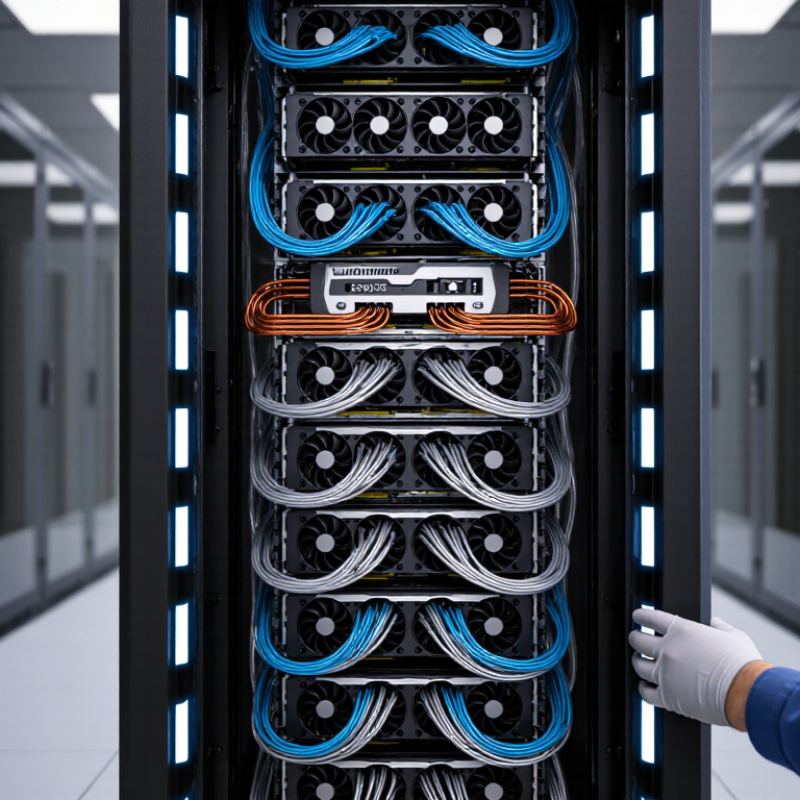
A machine learning server manufacturer in 2026 is defined less by a specification sheet than by reliable performance under sustained workloads. Peak accelerator counts look impressive. But training jobs expose less obvious limits: memory bandwidth, network behavior, cooling capacity, and power delivery. Small failures matter.
A credible manufacturer validates complete configurations, not just individual components. It should publish workload-based benchmarks, identify software and firmware versions, and explain how results were measured. Ask how a server performs during a long training run, with accelerators drawing near-maximum power in a warm rack. Clear answers beat vague claims. They also make comparisons fairer.
Service is part of the product. Look for documented burn-in tests, replaceable parts, remote diagnostics, and realistic response times. A capable technical team can help size storage for data pipelines and spot network bottlenecks before deployment. Details matter. Still, no benchmark predicts every workload, and results can age quickly as models and software change. Manufacturers should explain where their evidence ends and help customers retest systems with their own data. That humility is useful, though not always present. A server suited to a lab may need different cooling, memory, or interconnect choices at production scale.
| Evaluation Dimension | What a Capable Manufacturer Should Specify | Useful Evidence to Request | Why It Matters |
|---|---|---|---|
| Workload and system design | Configurations should be described for the intended workload, such as model training, fine-tuning, inference, or data preprocessing. Accelerator count, memory capacity, storage, and networking should be documented together. | A workload-specific configuration guide that identifies supported components, limits, and airflow or power requirements. | A system balanced for inference may not be suitable for large-scale training. A complete configuration helps avoid bottlenecks and unsupported combinations. |
| Accelerator support | The manufacturer should publish supported accelerator form factors, slot and interconnect arrangements, per-device power limits, and validated system configurations. | Product specifications, compatibility lists, thermal qualification details, and documented validation results for the proposed configuration. | Accelerators require appropriate power delivery, cooling, spacing, and host connectivity; nominal slot compatibility alone does not establish system-level support. |
| CPU, memory, and expansion | Specifications should state processor support, memory type and maximum capacity, ECC support where available, memory-channel population guidance, and expansion-slot capabilities. | A technical data sheet and configuration rules showing supported memory population and the effect of installed devices on available slots or bandwidth. | Data loading, preprocessing, and multi-accelerator workloads can be limited by host memory capacity or CPU-to-device connectivity. |
| Networking and distributed scaling | The design should identify supported Ethernet or other fabric options, port speeds, adapter compatibility, and the network topology required for multi-node deployments. 100 Gb/s and faster links are available for high-throughput systems; the appropriate speed depends on workload and scale. | Validated network adapter and switch compatibility, cabling requirements, topology diagrams, and multi-node performance test methodology. | Distributed training and large data transfers can be constrained by network bandwidth, latency, or topology, even when each server has capable accelerators. |
| Storage and data movement | The manufacturer should disclose supported NVMe and other drive options, drive-bay limits, boot-device arrangements, and storage-controller configuration. | Drive compatibility lists and measured storage results that state the test workload, queue depth, drive count, and whether results are sequential or random. | Training pipelines often read large datasets repeatedly; storage performance should be evaluated using workloads resembling the intended data pipeline. |
| Power, cooling, and rack readiness | Published documentation should include maximum system power, supported input power, thermal operating limits, airflow direction, acoustic information where available, and rack requirements. | Installation and service manuals, power and cooling planning data, and a configuration-specific bill of materials. | High-density accelerator systems can exceed the power or cooling capacity of an existing rack. Facility readiness should be confirmed before deployment. |
| Firmware and security controls | The platform should document firmware update procedures, security settings, access controls, and available integrity protections such as signed firmware or secure boot where supported. | Security documentation, firmware release notes, vulnerability notification process, and a clear method for verifying updates and configuration changes. | Transparent, maintainable firmware processes help operators manage security risks throughout the server’s service life. |
| Reliability and serviceability | The manufacturer should define warranty terms, service coverage, replacement-part processes, diagnostic tools, and field-replaceable components for the offered configuration. | Written support terms, service-level details where offered, maintenance procedures, and parts availability commitments applicable to the deployment location. | Repair time and parts access affect operational continuity; support promises should be specific to the buyer’s region and deployment scale. |
| Software and lifecycle support | The system should have documented operating-system and driver support, tested accelerator software compatibility, and a published process for BIOS, firmware, and platform updates. | A compatibility matrix with version numbers, release dates, update instructions, and a record of configuration validation. | Machine-learning stacks change frequently. Explicit compatibility information reduces deployment risk and helps reproduce working environments. |
| Performance transparency | Any performance claim should identify the server configuration, software versions, precision, workload, batch size, and measurement method. | Reproducible benchmark reports or customer-specific acceptance tests using representative models and data. | Results from different workloads or software settings are not directly comparable. Configuration details make performance claims more useful. |
| Compliance and documentation | The supplier should identify applicable safety and regulatory certifications for the exact product and destination market, rather than relying on general claims. | Current certificates or declarations, product labels, installation documents, and traceable model or configuration identifiers. | Regulatory requirements vary by market and product configuration; documentation helps procurement and deployment teams verify compliance. |
| Selection note: There is no single best configuration for every machine-learning workload. Compare manufacturers using validated configurations, transparent performance evidence, facility requirements, software compatibility, and support terms relevant to the planned deployment. | |||
Accelerators handle parallel calculations, while CPUs coordinate tasks and supply data. Memory bandwidth and fast links help keep processors busy. Details matter.
Accelerators need data quickly. High-bandwidth memory sits close to them, while system RAM holds larger workloads and datasets. Slow transfers waste compute time.
No. NVMe storage can stage training data, but it cannot fix a weak network. Multi-server jobs also need fast adapters and low-latency links.
Large-model training may need dense accelerators, high memory bandwidth, and fast interconnects. Inference often needs predictable latency, efficient power use, and local storage.
Request sustained workload tests, performance-per-watt measurements, and validated configurations. A short demo can hide thermal throttling or network bottlenecks. Counts can mislead.
Check rack power, airflow, cooling capacity, and redundant supplies together. Dense racks may need liquid cooling or facility changes. Heat is real.
Review repair times, spare-part availability, firmware updates, warranty response, and regional support. Can technicians replace a failed power supply quickly? That matters.
Compare power, cooling, support, and upgrade limits over the planned service life. Include rack and monitoring compatibility, not just purchase price. I’d still double-check the assumptions.
Estimates put data-center electricity use near 460 TWh in 2022, with widely varying 2026 projections. They cover all data centers, not only machine-learning servers.
In 2026, choosing the right machine learning server manufacturer means looking beyond headline specifications to understand how a system will perform in real workloads. Key components such as processors, accelerators, memory, storage, networking, and cooling work together to determine training speed, inference capacity, scalability, and energy efficiency. A balanced configuration should support the intended models and software while leaving room for future growth.
Manufacturers can be evaluated by examining performance benchmarks, build quality, reliability, technical support, warranty coverage, and the ability to customize systems. There is no single best option for every organization: the right choice depends on workload size, deployment environment, infrastructure compatibility, budget, and operational needs. Comparing these factors helps teams select a dependable server solution that can deliver consistent performance and adapt as machine learning requirements evolve.
