NexoraGPU NexoraGPU

Who Is the Best Deep Learning Server Manufacturer in China?

Time:2026-10-24 Author:Madeline
0%

Choosing the best deep learning server manufacturer in China is not a simple ranking exercise.
A strong supplier must prove performance, reliability, service quality, and long-term engineering capability.
Brand visibility alone is insufficient.

A useful starting point is the practical workload.
Researchers may need eight-GPU systems for large language models.
Factories may require rugged servers for continuous computer vision inspection.
Universities may prioritize flexible configurations, clear documentation, and manageable budgets.
These needs are different.
That matters.

Charles Liang, president and CEO of Supermicro, has emphasized, “The future of computing is accelerated computing.” His observation reflects a central industry reality: accelerators, high-speed networking, efficient cooling, and optimized software now shape server value. A Chinese deep learning server manufacturer should therefore be judged beyond its product catalogue. Buyers should examine GPU compatibility, PCIe and NVLink support, memory capacity, power design, thermal testing, warranty response, and spare-parts availability. On-site service also deserves attention. A server that performs well in a showroom may behave differently in a crowded data center.

This article compares leading Chinese manufacturers through evidence rather than promotional language. It considers documented deployments, technical teams, manufacturing controls, customer feedback, and upgrade flexibility. Some conclusions may remain imperfect. Public specifications do not reveal every failure rate or support delay. That limitation should be acknowledged, not hidden. The best supplier is usually the one that matches the workload, facility, budget, and risk tolerance with honest technical guidance.
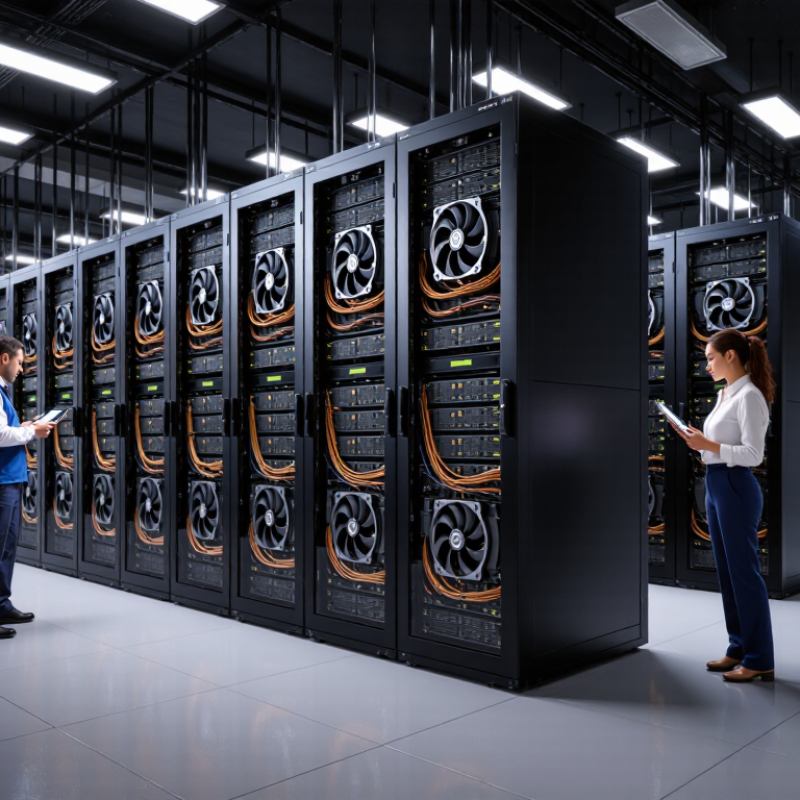
Who Is the Best Deep Learning Server Manufacturer in China?

Definition of Deep Learning Servers and Their Role in AI Computing

Deep learning servers are specialized computing systems built for training and running neural networks. They combine accelerators, high-speed memory, fast storage, and low-latency networking. Unlike ordinary servers, they process thousands of matrix operations in parallel. This makes them essential for computer vision, language models, robotics, and scientific simulation.

The Stanford AI Index 2024 reports that training compute for notable AI models has been doubling roughly every eight months. IDC also projected global AI infrastructure spending at about 154 billion US dollars in 2024. These figures explain the growing demand for reliable server platforms in China. A strong system needs more than powerful processors. Cooling design, power stability, GPU communication, and software compatibility directly affect training time. Field testing often reveals uncomfortable details. A server may look impressive, yet waste energy during memory transfers. That is easy to miss.

Tips: Compare performance per watt, not peak speed alone. Test real workloads before purchasing. Check replacement cycles, technical support, and data security controls. Keep room for memory expansion.

Selecting the best manufacturer therefore requires practical evidence. Ask for benchmark results using your own model size, dataset, and batch settings. Review failure records and maintenance response times. IDC and other industry reports provide useful market direction, but they cannot replace site testing. I would also question extremely optimistic performance claims. They may be correct in ideal conditions, but ideal conditions rarely last.

Key Criteria for Evaluating Chinese Deep Learning Server Manufacturers

Choosing the best deep learning server manufacturer in China requires more than comparing processor counts. A reliable evaluation starts with workload evidence. Ask for benchmark results using models similar to yours, not only laboratory figures. Training speed, memory bandwidth, storage performance, and accelerator compatibility should be tested together. Small details matter. A weak cooling design can reduce performance during long training runs.

Manufacturing experience is equally important. Examine quality-control procedures, burn-in testing, component traceability, and failure-reporting practices. A professional supplier should explain how servers perform under continuous workloads, high room temperatures, and repeated power cycles.

Request sample test records and realistic delivery schedules. Vague answers create avoidable risks. I have seen impressive specifications become less convincing when technical documentation was incomplete.

After-sales capability often separates a capable manufacturer from a temporary assembler. Evaluate remote diagnostics, spare-parts availability, response times, firmware updates, and engineer training. The service team should understand distributed training, network bottlenecks, and container environments. Security and regulatory compliance also deserve written evidence.

No supplier is perfect. Some manufacturers may have strong hardware but limited international support, while others offer better service but fewer customization options. A careful buyer should inspect both strengths and weaknesses through pilot testing, reference checks, and a clearly defined acceptance process.

Leading Chinese Manufacturers and Their Deep Learning Server Strengths

Chinese deep learning server manufacturers have built strong capabilities across hardware design, thermal management, and production scale. Their platforms often support dense GPU configurations for computer vision, language models, and scientific workloads. Many suppliers also offer customized chassis, memory layouts, and networking options. This flexibility helps research teams match servers with specific model sizes and training methods. In practice, engineers may adjust airflow after observing uneven temperatures across a rack.

Liquid cooling is becoming a practical strength for high-density deployments. It can reduce fan noise and maintain steadier performance during long training sessions. Some manufacturers combine advanced cooling with high-speed interconnects and large power supplies. Their local supply chains can shorten delivery times and simplify replacement planning. However, specifications alone can mislead. A server with more GPUs may perform poorly if its communication fabric or storage system is weak.

Reliable manufacturers usually provide burn-in testing, thermal reports, firmware updates, and clear warranty procedures. They should also share benchmark conditions, not only attractive peak scores. Field experience matters here. A small documentation gap can delay deployment for days. After-sales engineers who understand distributed training are especially valuable. Buyers should test real workloads, review power consumption, and confirm support response times before ordering. The best choice is rarely the most powerful machine; it is the system that remains stable, serviceable, and predictable under daily pressure.

Who Is the Best Deep Learning Server Manufacturer in China? - Leading Chinese Manufacturers and Their Deep Learning Server Strengths

Capability-based comparison of major Chinese deep learning server manufacturer profiles. Company names and brand-specific data are intentionally omitted.

Manufacturer Profile Primary Deep Learning Strength Typical Server and Accelerator Capability Key Technical Advantages Best-Fit Use Cases
General-Purpose Rack Server Specialist Balanced performance
Strong standardization and broad enterprise deployment support.
1U, 2U and 4U rack servers with multiple PCIe accelerator slots; configurations commonly support single-node GPU training and inference workloads. Broad CPU compatibility, mature remote management, redundant power options, strong availability of replacement parts and standardized data-center integration. Enterprise AI platforms, model inference, departmental training, private-cloud environments and mixed virtualization workloads.
High-Density AI System Integrator Maximum GPU density
Designed for large-scale training and accelerated computing.
4U and 8U systems optimized for several high-power accelerators, with high-capacity memory, large PCIe bandwidth and optional direct-liquid-cooling designs. High power-delivery capacity, optimized airflow or liquid cooling, GPU-aware topology design and support for multi-node cluster deployment. Large language model training, computer vision, scientific computing, recommendation systems and AI cloud clusters.
Domestic-Computing Platform Specialist Local ecosystem compatibility
Focus on domestic processors, operating systems and accelerator platforms.
Rack and tower systems built around locally available CPU architectures and accelerator cards; configurations vary by software ecosystem and application requirements. Support for localized operating systems, domestic middleware, local supply-chain requirements and government or regulated-industry procurement standards. Public-sector AI, financial services, education, regulated industries and projects requiring localized infrastructure.
HPC and Cluster Infrastructure Specialist Multi-node scalability
Optimized for distributed training and high-throughput computing.
Cluster-ready 2U, 4U and 8U nodes with high-speed network adapters, multi-GPU configurations and support for shared-storage or parallel-file-system environments. Cluster topology planning, high-speed east-west networking, workload scheduling, rack-level integration and performance tuning for distributed workloads. Distributed deep learning, weather simulation, engineering research, genomics, energy exploration and university supercomputing.
Edge and Industrial AI Server Specialist Compact deployment
Prioritizes reliability, low latency and deployment flexibility outside traditional data centers.
Short-depth rack, workstation and ruggedized systems supporting compact accelerators, low-power GPUs or application-specific inference cards. Compact form factors, extended-temperature options, shock and vibration resistance, lower acoustic output and local inference capability. Smart manufacturing, transportation, retail analytics, security inspection, robotics and real-time computer vision.
Customized AI Infrastructure Provider Project-specific optimization
Tailored hardware, software and deployment services.
Customized combinations of CPU, accelerator, memory, storage, networking and cooling based on model size, framework requirements and facility constraints. Pre-deployment benchmarking, solution design, on-site installation, software-stack optimization and lifecycle support. Specialized research, large enterprise deployments, AI-as-a-service platforms and projects with unusual power, space or software constraints.
Evaluation note: There is no universally best manufacturer. The most suitable choice depends on accelerator availability, software compatibility, GPU density, cooling capacity, cluster networking, service coverage, power infrastructure and total cost of ownership.

Comparing Performance, Scalability, Reliability, and Total Cost

Choosing the best deep learning server manufacturer in China starts with workload, not slogans. In practical evaluations, GPU throughput matters, but memory bandwidth often decides real training speed. A server that processes images quickly may struggle with language models. Measure tokens per second, power draw, and cooling noise under sustained load. Short benchmarks can mislead. I have seen impressive results fade after several hours.

Scalability should be tested beyond one machine. Check GPU interconnects, PCIe lane allocation, rack density, and support for mixed accelerator generations. A useful design adds nodes without forcing a complete network replacement. Ask for a pilot cluster and repeat the same workload at 25%, 50%, and 100% capacity. Weak scaling may look acceptable while communication overhead quietly grows. This is where technical documentation and engineer responses matter more than polished sales slides.

Reliability includes firmware control, component traceability, remote management, and replacement speed. Request failure records, burn-in procedures, and clear service-level commitments. Parts availability inside China can reduce downtime, yet local stock should be verified, not assumed. Total cost includes electricity, liquid or air cooling, software support, networking, and technician hours. A cheaper chassis may require louder fans and more maintenance. I would also price a three-year operating period, then challenge every estimate. Some assumptions remain uncertain because workloads change, and no spreadsheet captures every midnight repair.

How to Select the Best Manufacturer for Specific AI Workloads

Who Is the Best Deep Learning Server Manufacturer in China?

The best manufacturer depends on your specific artificial intelligence workload, not on marketing claims. Image training, language models, and real-time inference require different server designs. A practical evaluation should begin with your model size, batch volume, training frequency, and response-time target.

For large training jobs, inspect accelerator density, high-speed interconnects, memory capacity, and cooling performance. Ask the manufacturer to run your own model, not only a public benchmark. Record training time, power consumption, temperature, and failure recovery. Small details matter, especially during overnight experiments.

For inference, prioritize low latency, stable drivers, flexible memory, and efficient rack deployment. A compact server may outperform a larger system when requests arrive unevenly.

I have found that technical support often separates a reliable supplier from an impressive showroom. Request installation guidance, firmware policies, spare-part availability, and response-time commitments. Check whether engineers understand distributed training and container-based workflows. Review independent customer feedback where possible. No evaluation is perfect. I once underestimated network congestion and blamed the processors for slow training. That mistake changed my checklist. Manufacturers should also provide transparent energy data, warranty terms, security practices, and realistic delivery schedules. A pilot project with measurable acceptance criteria is safer than a large purchase based on specifications alone.

FAQS

How should buyers compare deep learning server manufacturers?

Compare workload evidence, not processor counts alone. Ask for benchmarks using models similar to yours. Measure training speed, memory bandwidth, storage performance, and accelerator compatibility together.

Which tests reveal real server performance?

Run your own model during a pilot test. Record training time, power use, temperature, and recovery after failures. Test overnight. Laboratory figures may not reflect daily workloads.

What cooling details should buyers examine?

Check cooling performance during long training sessions. Ask how systems behave in warm rooms and continuous operation. Weak cooling can reduce speed over time. This detail is easy to underestimate.

How can buyers assess manufacturing quality?

Review burn-in testing, quality-control procedures, and component traceability. Request sample test records and failure-reporting procedures. Ask about repeated power cycles. Incomplete documents deserve caution.

What support services should a reliable supplier provide?

Look for remote diagnostics, spare parts, firmware updates, and trained engineers. Confirm response times in writing. Support should cover distributed training, network bottlenecks, and container environments.

How do workload differences affect server selection?

Image training, language models, and real-time inference need different designs. Large training jobs require strong interconnects, memory, accelerator density, and cooling. Inference usually needs low latency and stable drivers.

What information should buyers request before a large purchase?

Request energy data, warranty terms, delivery schedules, security practices, and service commitments. Check independent customer feedback when available. Vague answers create avoidable risks.

Is a larger server always better for inference?

No. A compact system may perform better when requests arrive unevenly. Focus on latency, memory flexibility, and rack deployment efficiency. Size alone can mislead.

Why is a pilot project important?

A pilot exposes network congestion, thermal problems, and recovery weaknesses. Define measurable acceptance criteria before purchasing. I once blamed processors for slow training. Network congestion was the real problem.

Conclusion

Choosing the best deep learning server manufacturer in China requires more than comparing processor specifications or purchase prices. Deep learning servers are specialized computing systems designed to handle intensive AI workloads such as model training, inference, computer vision, and natural language processing. A strong manufacturer should provide powerful GPU and CPU configurations, high-speed memory, efficient networking, flexible expansion options, and reliable thermal management.

When evaluating manufacturers, organizations should compare performance, scalability, system stability, after-sales support, customization capabilities, delivery efficiency, and total cost of ownership. Different suppliers may focus on different strengths, including high-density computing, energy efficiency, enterprise reliability, or solutions for research and industrial applications. The best choice depends on the customer’s workload, model size, data volume, budget, deployment environment, and future growth plans. By balancing computing performance with long-term maintenance, compatibility, and service quality, buyers can select a deep learning server manufacturer that delivers dependable AI infrastructure and sustainable value.

Madeline

Madeline

Madeline is a dedicated marketing professional with a wealth of expertise in our company's core offerings. With a keen understanding of the industry, she brings a unique perspective to her role, consistently delivering high-quality content that highlights the superior aspects of our products. As......