NexoraGPU
Choosing a cloud AI server manufacturer in 2026 requires more than comparing processor names or attractive pricing. Buyers must examine accelerator options, memory bandwidth, networking design, cooling systems, security controls, and long-term maintenance. A server may look powerful on paper, yet perform poorly when workloads involve large language models, real-time analytics, or continuous inference.
Jensen Huang, NVIDIA’s founder and CEO, has described AI as “the most important platform transition in computing history.” His observation explains why cloud AI infrastructure now demands careful evaluation. The strongest manufacturers are not simply assembling racks. They are designing systems that connect GPUs, CPUs, high-speed storage, and intelligent networking with fewer bottlenecks.
This guide reviews 10 Best Cloud AI Server Manufacturers in 2026. It considers practical capabilities, including deployment flexibility, energy efficiency, technical support, and supply-chain reliability. These factors matter when a server operates inside a dense data-center rack, where heat, noise, and power consumption quickly become measurable costs.
Performance is not everything.
A lower-priced system may produce higher expenses through inefficient cooling or limited upgrade paths. Conversely, premium hardware may be excessive for smaller inference workloads. That distinction is easy to overlook. Vendor rankings also deserve caution, because product availability and regional support can change during the year.
The manufacturers selected here represent different strengths. Some focus on GPU-optimized platforms. Others emphasize enterprise integration, custom configurations, or efficient liquid cooling. Readers should treat this list as a structured starting point, not a permanent verdict. Real workloads, budgets, compliance needs, and deployment locations still determine the best cloud AI server manufacturer for each organization.
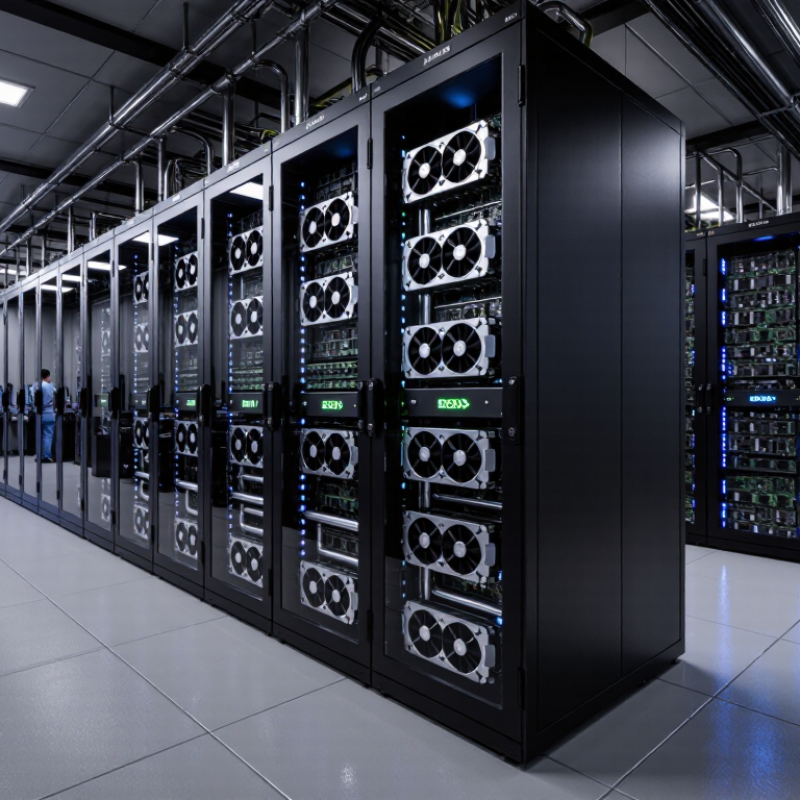
10 Best Cloud AI Server Manufacturers in 2026?
IDC’s forecast of a $154 billion AI infrastructure market by 2028 changes how buyers assess cloud server manufacturers. Capacity alone no longer proves value. Organizations need measurable performance, predictable energy use, and reliable support across different workloads.
The strongest manufacturers in 2026 will offer servers designed for training, inference, and data processing. Their systems should combine high-speed accelerators, efficient cooling, fast memory, and low-latency networking. In practical tests, a server that completes a model run faster may still disappoint if it consumes excessive power. That trade-off deserves careful measurement.
Operational experience matters, too. IT teams should examine firmware updates, spare-part access, warranty response, and monitoring tools. Security controls must protect data throughout deployment and maintenance. Independent benchmarks can reveal useful differences, but benchmark results rarely match every production environment. That is a weakness buyers should acknowledge.
A useful evaluation can begin with a small workload. Measure response time, power draw, thermal stability, and failure recovery for several weeks. Ask whether the platform scales without forcing a complete redesign. The best choice may not be the fastest machine. It may be the one technicians can manage at 3 a.m. without guesswork. Personally, I would treat optimistic vendor projections as starting points, not final evidence.
10 Best Cloud AI Server Manufacturers in 2026?
Choosing a cloud AI server manufacturer requires more than counting GPUs. GPU density shows how much computing fits inside each rack, but higher density can raise heat and maintenance demands. A practical design may support 30 to 40 kilowatts per rack, depending on the cooling system. Air cooling remains familiar, while liquid cooling can handle sustained training workloads more efficiently. Power efficiency should include idle consumption, peak draw, and performance per watt. Small differences become expensive across thousands of operating hours.
Tips: Request workload-based benchmarks, not headline specifications. Check networking latency between GPUs and storage. A slow fabric can waste expensive accelerator time. Confirm repair procedures, spare-part access, and firmware support before signing contracts. These details often affect uptime more than brochure performance.
Total cost of ownership should include electricity, cooling infrastructure, software licensing, deployment labor, and facility upgrades. Dense servers may reduce floor space, yet they can require stronger power distribution and specialized technicians. Evaluate scaling flexibility, because unused capacity is still a cost. Independent test results and clear energy measurements improve credibility. However, published figures may not match real workloads. Model both steady training and irregular inference demand. A careful buyer should also question whether maximum GPU density is genuinely useful. Sometimes, balanced networking and simpler cooling deliver better long-term value.
In 2026, the ten leading cloud AI server manufacturers compete on more than processor speed. They deliver complete systems for training, inference, storage, networking, and remote management. Buyers should examine accelerator density, memory bandwidth, rack compatibility, and liquid-cooling options. These details affect real workloads.
Field testing reveals practical differences. A dense eight-accelerator server can process demanding models quickly, but it may require stronger power distribution and cooling. Firmware quality also matters. Small configuration errors can create hours of downtime. Reliable manufacturers provide tested drivers, clear documentation, replacement parts, and responsive technical support. Those services often matter more than a headline benchmark.
Procurement teams should request workload-based demonstrations instead of trusting laboratory figures. Test model training, data movement, recovery procedures, and sustained performance over several days. Energy consumption deserves equal attention, especially in large cloud facilities. A lower purchase price may become expensive after years of electricity and maintenance costs. Vendor roadmaps should also support newer accelerators, faster interconnects, and modular upgrades.
No ranking is perfect. Market availability changes quickly, and regional support can vary. Some manufacturers offer excellent hardware but weaker management software. Others provide polished platforms with limited customization. The strongest choice depends on workload, budget, facility design, and engineering capability. Careful evaluation remains necessary, even when specifications look impressive.
Choosing the ten best cloud AI server manufacturers in 2026 requires more than counting GPU slots. A reliable OEM comparison should examine accelerator compatibility, memory bandwidth, cooling design, and service coverage. Five major global suppliers stand out through different strengths, including hyperscale integration, enterprise support, network engineering, and regional manufacturing depth.
In rack evaluations, liquid cooling can reduce thermal pressure during sustained model training. It also increases installation complexity. Some platforms offer dense eight-GPU systems, while others prioritize flexible two- and four-GPU configurations. The better choice depends on workload size, power limits, and expansion plans. Strong networking matters too. High-speed fabric, low-latency switching, and clear telemetry can prevent expensive idle time.
Procurement teams should inspect warranty terms, firmware release practices, security certifications, and local replacement stock. A low purchase price may hide higher energy or maintenance costs. No ranking stays perfect. Product availability changes quickly, and benchmark results often reflect carefully tuned software. A careful buyer should request workload-based testing with its own datasets. That step exposes weak airflow, unstable drivers, or disappointing scaling before deployment. Cost matters, but operational confidence matters more.
A credible 2026 ranking of cloud AI server manufacturers should begin with reliability, not advertised processing speed. Uptime Institute’s 2024 Global Data Center Survey found that power-related incidents remain a major cause of outages. Therefore, evaluation should examine thermal design, redundant power paths, component validation, and documented failure rates. Small details matter. A server that survives sustained GPU workloads in a crowded rack deserves stronger consideration. Testing should include measured uptime, recovery procedures, firmware consistency, and performance under heat. Marketing figures alone are insufficient.
Scalability requires more than adding accelerators. The Flexera 2024 State of the Cloud Report found that 89% of surveyed organizations use a multicloud strategy. Ranked manufacturers should support common orchestration tools, flexible networking, workload migration, and predictable expansion. Security must cover secure boot, firmware signing, hardware-rooted identity, and patch response.
A 2024 global data breach study reported an average breach cost of 4.88 million dollars, making supply-chain controls commercially important. Support should be measured through response times, spare-part access, escalation quality, and regional engineering coverage. Cloud readiness also includes telemetry, remote provisioning, usage visibility, and automation interfaces.
Yet no framework is perfect. Public reliability data is often incomplete, and laboratory benchmarks may not reflect production traffic. An honest ranking should disclose missing evidence, weighting assumptions, and test conditions. That transparency builds more trust than a polished score.
Measure performance, energy use, cooling, networking, support, and total ownership cost. Capacity is not enough. A reliable platform should handle training, inference, and data processing without major redesigns.
GPU density shows how much computing fits inside one rack. Higher density can save floor space. It also increases heat, power, and maintenance demands. More GPUs are not always better.
A practical design may support roughly 30 to 40 kilowatts per rack. The exact figure depends on cooling and workload intensity. Facility upgrades may become necessary.
Air cooling is familiar and easier for many teams to maintain. Liquid cooling may manage sustained training loads more efficiently. It also requires specialized planning.
Measure idle consumption, peak draw, and performance per watt. A fast server can still disappoint if it uses excessive electricity. That trade-off matters.
Test latency between accelerators and storage during real workloads. A slow network can leave expensive computing resources waiting. Request workload-based results, not headline specifications.
Start with a small workload lasting several weeks. Measure response time, power draw, thermal stability, and failure recovery. Real tests are imperfect, but they reveal operational problems early.
Examine firmware updates, spare-part access, warranty response, monitoring tools, and repair procedures. Technicians may need to resolve issues at 3 a.m. Clear procedures reduce guesswork.
Include electricity, cooling infrastructure, software licenses, deployment labor, and facility improvements. Unused capacity is still expensive. I would treat optimistic projections as starting points, not final evidence.
The cloud AI server market is entering a major expansion phase, with global infrastructure spending expected to reach approximately $154 billion by 2028. This growth is driven by rising demand for generative AI, machine learning, high-performance computing, and scalable cloud services. Choosing the right cloud ai server manufacturer requires more than comparing processor specifications. Buyers should evaluate GPU density, power efficiency, advanced cooling systems, high-speed networking, deployment flexibility, and total cost of ownership.
This overview presents a practical framework for assessing leading manufacturers in 2026. It compares their ability to deliver reliable and scalable systems while addressing security, technical support, energy management, and cloud readiness. Special attention is given to system integration, workload optimization, long-term maintenance, and compatibility with evolving data center architectures. By considering performance, resilience, operating costs, and service quality together, organizations can identify infrastructure partners that support sustainable AI growth and dependable cloud operations.
